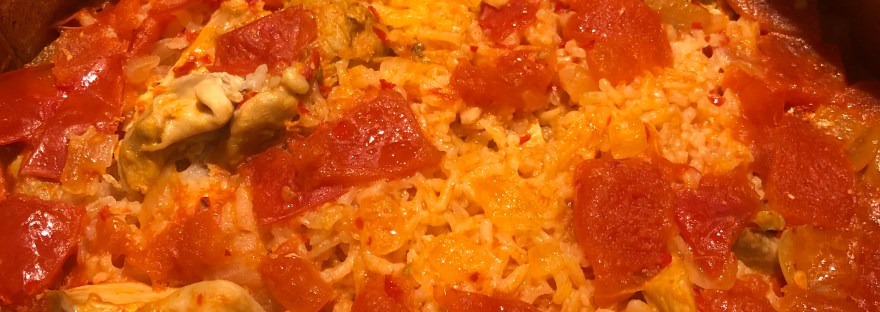
Today, I violated my own rule of not cooking chicken (unless it’s chicken soup) in the house and for good reason. For the first time in a very long time, I made jollof rice.
There are several reasons why I hardly ever cook Ghanaian food at home. Ingredients must be just right and I don’t know how to pick them. West African grocery stores are a wondrous maze to me. I remember the last time I went was about a dozen years ago when my brother visited from Singapore and wanted to stock up on Ghanaian groceries. We went to a store in West Philly with a Ghanaian friend who led us through the many aisles to make sure we got the legit stuff (We also met the co-owner of the store, a Korean woman married to a Ghanaian Jamaican man, and we chatted for a while. That’s another story.). Growing up, I only ever ate food that was made for me and I never bothered to learn to make it myself. Had I known how wistful I would be, I would have paid more attention. Finally, but perhaps most importantly, it was the absence of shito.
Shito is a Ghanaian hot pepper sauce made with hot pepper, oil, and dried fish as the main ingredients. Each family had their own shito recipe and you never bought the stuff in the store, at least not when I was growing up. It’s an all purpose condiment that goes with everything and the smell and taste is what makes the food Ghanaian in my mind. If I go to a restaurant that purports to serve Ghanaian food and shito is not offered, it’s not real to me. The last time I had shito in the house was almost a decade ago when a friend gifted me a small jar. If I remember correctly, it was a sample for a recipe that was about to go into the market in Canada and the United States and for that reason, it was not as pungent as it should have been. It was good but not great.
Then a few weeks ago, I ordered jollof from Fudena, a Ghanaian take out near my house. In the comment, I asked if she sold shito. When I went to pick up the order, Ruth, the founder, was working the window and she said that she did not sell it but she had some that her mom made at home and she was happy to deliver it to me. Two weeks later, she texted me to say that she was picking her mom up from the train station and she would swing by with the shito. I met Ruth on the corner where she was parked and she handed me a bag and it was HEAVY!
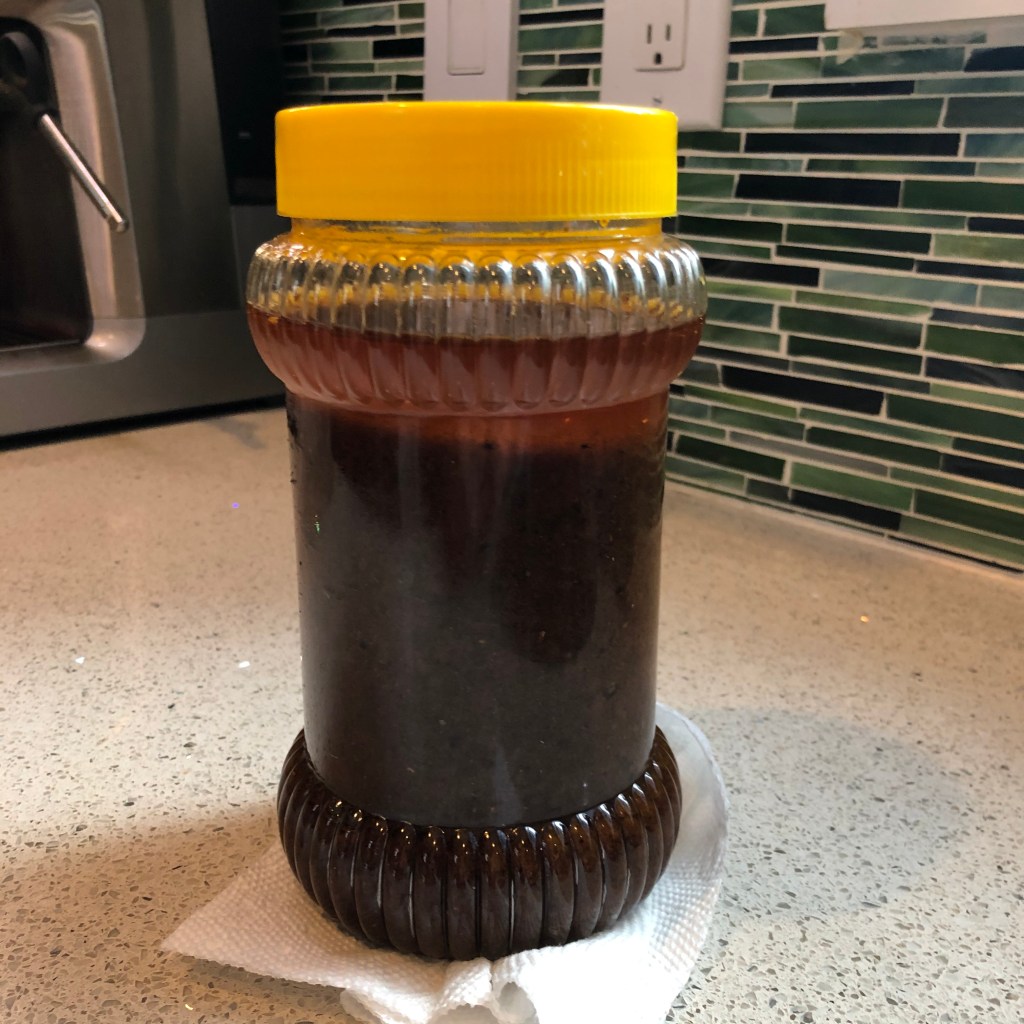
What I received was a full liter of shito, the real deal, freshly made less than a week ago, by Ruth’s mom! My jaw dropped behind my mask. I was so grateful. We ended up chatting for about 15 minutes, Ruth and her mom in the car, me standing a few feet away, all of us masked. It was a while since I talked to someone who knew about Ghana in the 1980s, knew my school, understood the healthy skepticism we had about food that we didn’t personally know the source, all spoken with the familiar lilting Ghanaian accent. I have met Ghanaians and Ghanaian Americans in Philadelphia, mostly people who are younger than me and/or born in the United States. Talking to Ruth’s mom was like coming home. We promised to hang out once the pandemic was over to chat about growing up in Ghana. That jar of shito is, to me, a treasure.
Now, I had to make some jollof rice. The problem is making sure that the recipe is a Ghanaian one. A guest writer for Food 52 talks about jollof rice being a “unifying dish across West Africa” and offers a Nigerian recipe. That blog pissed me off for a while and I can tell you for sure that I wasn’t about to use that recipe. That being said, I wasn’t sure how much I could trust what I googled. Then, I remembered that when I was leaving for college, I had written down some recipes that I wanted to have with me when I finally learned how to cook. I dug it out from a box of letters and keepsakes that had traveled with me for almost three decades. The last recipe in it was jollof rice.
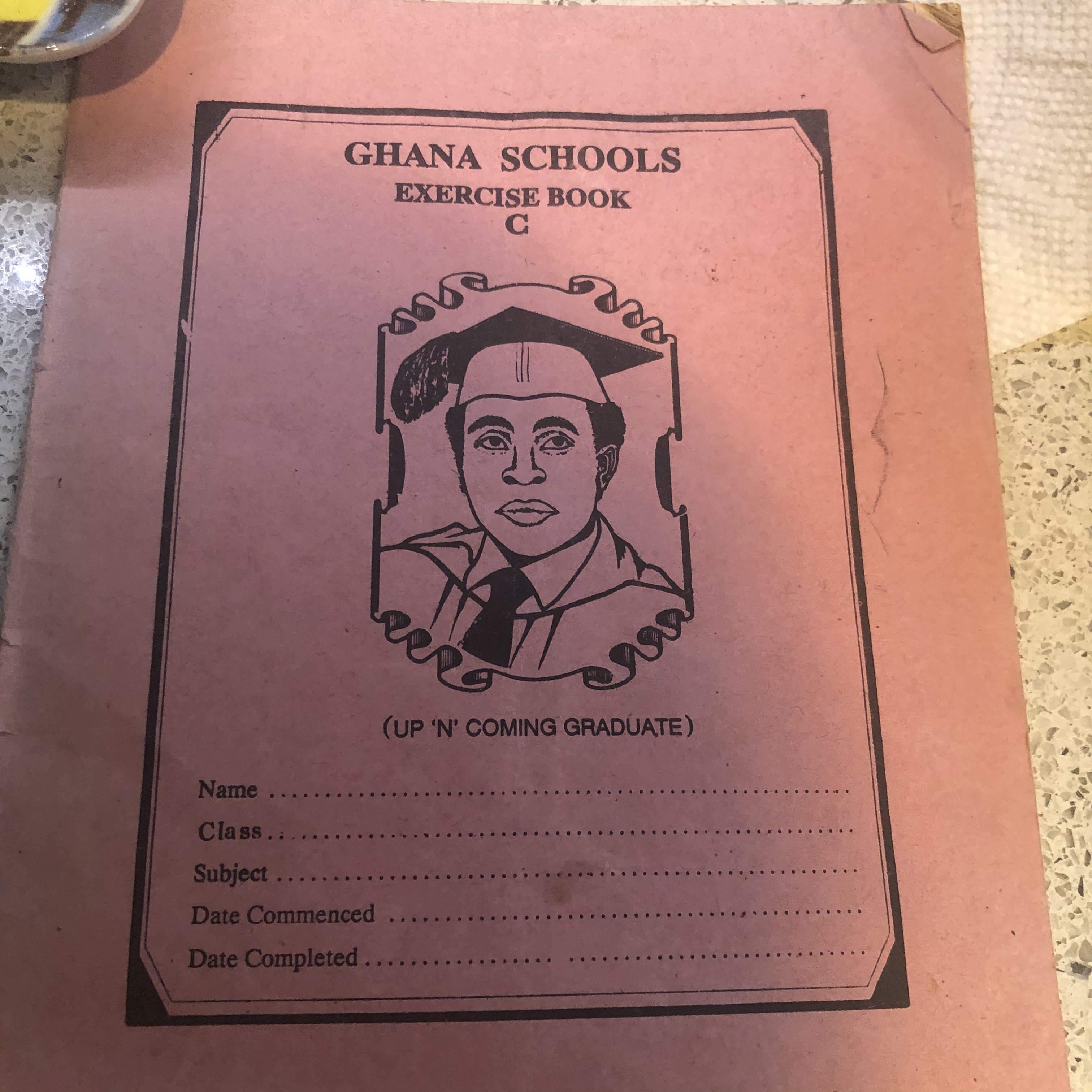
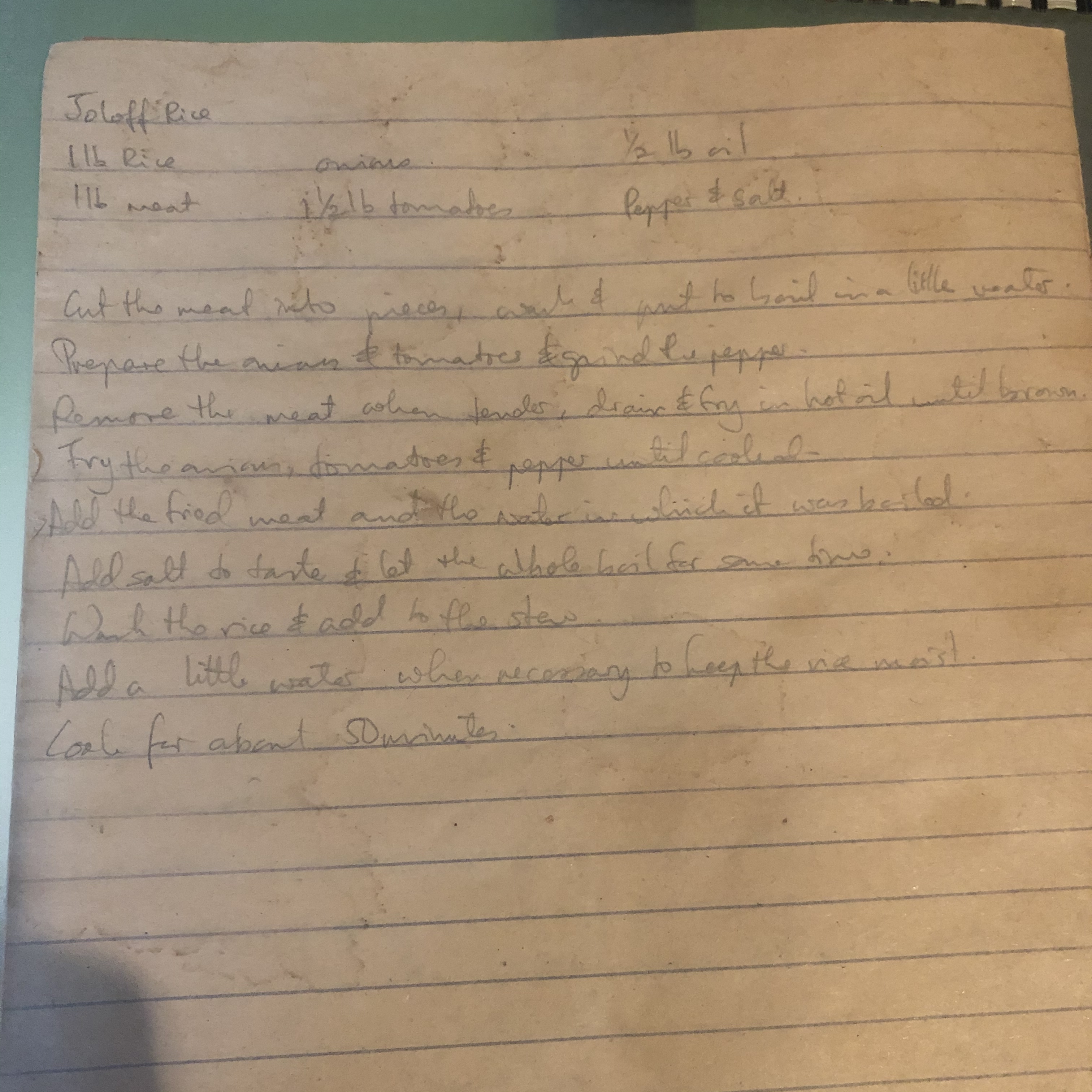
By the vagueness of the description, it was probably not out of a recipe book. I am guessing it was told to me by Auntie Amanda, the woman who helped raise me and cooked for the family, and I had quickly written it down.
Jollof Rice
- 1 lb rice
- onions
- 1/2 lb oil
- 1 lb meat
- 1 1/2 lb tomatoes
- Pepper & Salt
- Cut the meat into pieces, wash, and put to boil in a little water.
- Prepare the onions and tomatoes and grind the pepper.
- Remove the meat when tender, drain, and fry in hot oil until brown.
- Fry the onion, tomatoes, and pepper until cooked.
- Add the fried meat and the water in which it was boiled.
- Add salt to taste and let the whole boil for some time.
- Wash the rice and add to the stew.
- Add a little water when necessary to keep the rice moist.
- Cook for about 50 minutes.
Some notes:
- 1 lb of rice is about 2 1/4 cups of rice. I used white rice.
- 1 large onion, diced, is what I used.
- I used about 1/4 cup of olive oil.
- The meat I used is skinless boneless chicken thighs. It’s best not to have the skin on for this recipe. Although less common, you can use beef.
- I used 5 small vine ripened tomatoes, rough chopped, skin on.
- I added 5 cloves of garlic when boiling the meat and added it to the pot later. I used 2 cups of water to basically make the chicken broth.
- Pepper is not black pepper. Pepper is fresh hot pepper. Since I can’t get Ghanaian hot pepper, I used a combination of 2 Cayenne peppers and 10 red jalapeno peppers. I ground it with about 1 Tbsp of kosher salt in the food processor. I think I could have added a red habanero or Scotch Bonnet to make it spicier.
- Instead of adding more water to make the total amount of liquid necessary for cooking, I added a cup of Low Sodium V8.
- I used an Instapot. I had a recent debacle with potatoes not cooking properly in a tomato based curry and a friend pointed out that if you cook starch in an acid based sauce it will take longer unless done under pressure. Nothing worse than crunchy rice.
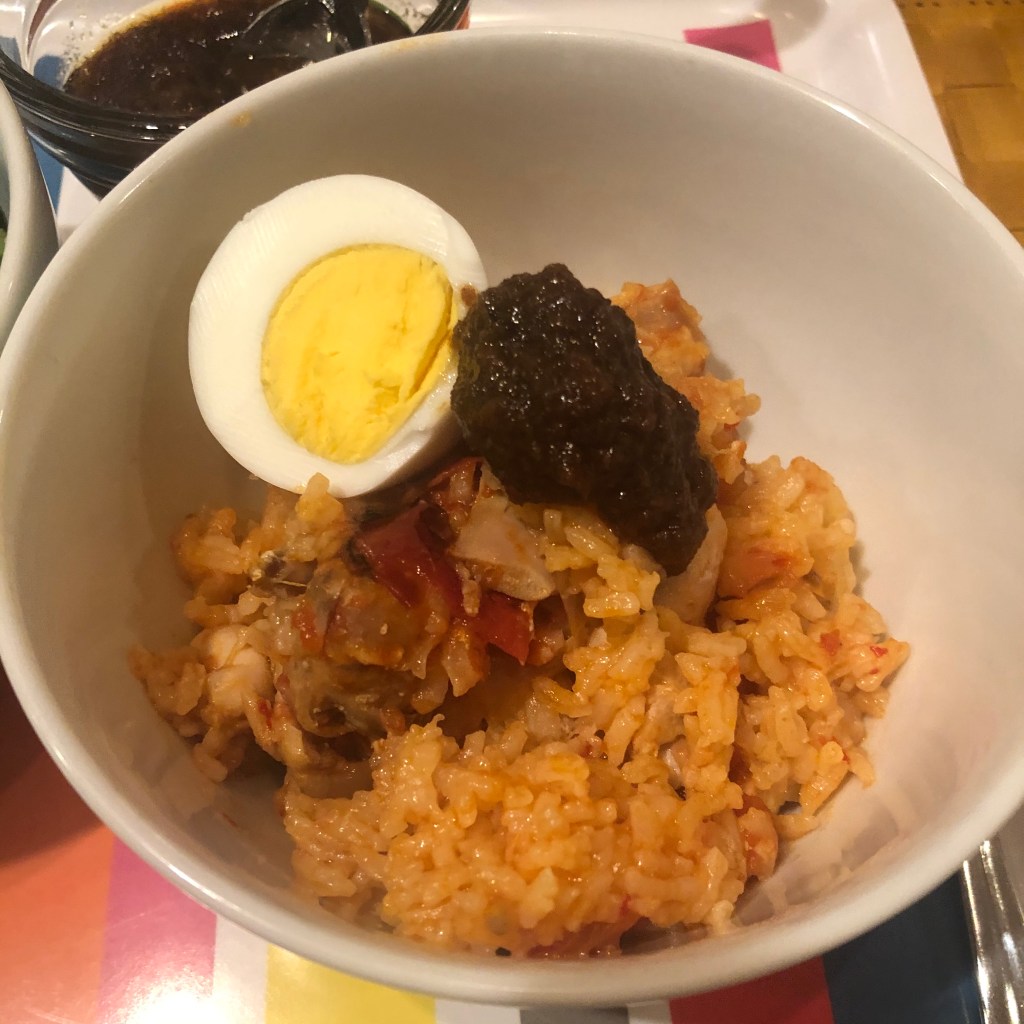
With the boiled egg and shito, it was exactly how I remember the jollof rice of my childhood to be. I was probably a tad exuberant with the shito because now I have heartburn. But I regret nothing!
I uploaded the photo on our family group chat. My brother wrote: “If it turned out well, please share the jollof recipe.” Then he added, “It’s not a Nigerian recipe, is it?”

 What will Dr. Gwak say?
Ok so love all of this. We are lucky in that Reading has a fair size Ghanaian community and we get good stuff regularly from the main Ghanaian grocery (they had club beer last time we went to James’ delight). And I am so lucky in that James, who is an awesome cook, fell in love with Ghanaian food when we lived there and has dedicated himself to refining his cooking of it. He makes a mean light soup, and groundnut soup, and I’ve always been so grateful for any iteration of jollof he made but he was always stressed and dissatisfied with it. Then we found Nicole Walters on Insta – Ghanaian American business woman living in Atlanta – and she had just posted an in-depth real-time cooking-with-me-in-the-kitchen video of her making Jollof. And he has NAILED it and is now so confident making it over and over again. Well worth having a look at the video, I love the woman….
LikeLike
That is true dedication! My brother makes more Ghanaian food than I do. One of these days, I am going to try making waakye. Wish me luck!
LikeLike
Definitely wish you luck. i miss waakye so much. The little Ghanaian bistro in Reading does a good one, so we survive. But I’m convinced you only get a good one by cooking enough for 50 people in an aluminium laundry bowl!
LikeLike