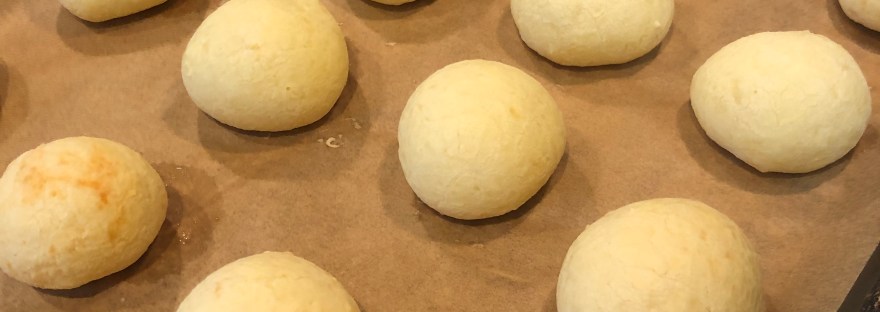
Several years ago, I traveled to São Paulo, Brazil for work. It was a very quick trip with a colleague who had grown up in Brazil and it was literally four days of back to back meetings. I didn’t see much of the city the two times I was in São Paulo, just a lot of highways and interior of buildings. I remember traffic being so bad that EMTs worked as pairs on a motorcycle so that weave in between the cars to get to medical emergencies. I remember the favelas on the hillside looking down onto one of the most prestigious universities in the country. I remember a vibrant nightlife where bars and restaurants were open late with sidewalks filled with young and old, watching football (soccer in American), laughing, eating, and drinking. I remember walking to the Ai Weiwei exhibit at a nearby museum past luxury car dealerships and posh houses and spraining my ankle on my walk back when I tripped over a flying garbage bag. I remember October being warm and welcoming, just like the people I met during my very brief visits. I remember the look of respect from the bartender when I ordered a cachaça neat instead of the usual caipirinha. I remember the food. Some of the flavors reminded me of the rich stews I grew up eating in Ghana. Some, like farofa, was completely new in taste and texture. And then, there was the ever present pão de queijo.
The breakfast at the hotel and in every coffee service for meetings, there was inevitably a bowl piled high of the golf ball sized bread. On most busy streets, there was a pão de queijo chain shop, much like you would a Dunkin Donuts, and people streamed in and out with a warm bag and a cup of strong Brazilian coffee. Being gluten free, I generally avoid the bread area, especially when traveling for work. There is nothing worse than being on a plane with a stomach ache or having to ask where the bathroom is in a different language. It looked tempting, but I steered clear of it on the first day.
On the second day, I asked my colleague what it was and why it was served all the time. He explained that it was pão de queijo, a traditional Brazilian cheese bread made with manioc flour, an edible root. I had no idea what manioc was but hell, it wasn’t wheat, so from that moment on, I chowed down on as many pão de queijo as I could get my hands on (with a lot of Lactaid pills, I might add). My hosts looked at me wth curious amusement at my enthusiasm for the bread.
The second time I was in São Paulo, I made sure to visit the grocery store to get a few bags of the pão de queijo mix. One of the unexpectedly delightful things about Brazil was that all packaged food items were marked to indicate whether it contained gluten so if I checked for “sin gluten” I was safe. GF package information had yet to be a standard in the United States and since I didn’t understand Portuguese to make out the ingredients, this took the guessing game out of the shopping process.
Once in Philadelphia, I followed the picture directions on the back of the package and was able to make some reasonably good pão de queijo. The problem was I never went back to Brazil and I was out of mixes. I tried out many recipes and finally settled on the recipe on Bon Appétit magazine. Although manioc/cassava/tapioca is used interchangeably, I am fairly certain there are regional differences to the root and consequently the flour that is milled from it. Also, fresh minas cheese is difficult to find in the US so the taste is not exactly as I remembered. Nevertheless, after many years of making it, I think I am finally settled on a pretty good approximation.
The awesome thing about pão de queijo is that it is an all-occasion bread that goes with everything. I have eaten it plain, smeared with jam, as an accompaniment for soup, in place of crackers for a meats and cheese platter, with chili. Explains why a batch doesn’t last more than three days on the counter. It’s best fresh out of the oven but if it’s cold, I prefer to zap it in the microwave for about 12 seconds to get back the chewy texture.
My tips:
- Until recently, I could only find tapioca flour/starch in Asian grocery stores. Nowadays, it is pretty easy to find now in most grocery stores so I stopped looking for manioc flour. Tapioca flour/starch is very fine so careful when dumping the flour and mixing vigorously–you, and your kitchen, will be covered in white powder. I have to constantly remind myself to pour all the flour gently into the pot all at once then mix quickly but slowly at first until the flour is about half incorporated.
- We don’t drink a lot of milk at home and whenever I buy a carton, I end up throwing out half of it. Also, during COVID, I shopped much more infrequently so the chances of having milk, especially whole milk, lying around was pretty much zero. Most plant based milk doesn’t have the fat content necessary to bring out the richness of the bread. In a pinch, I tried coconut milk and it worked! I usually have a few single use cartons of shelf stable coconut milk at home for soups and curry. Most recently, I bought coconut milk powder that can be reconstituted with water because I am suspicious of stabilizers on shelf stable items. Works just as well.
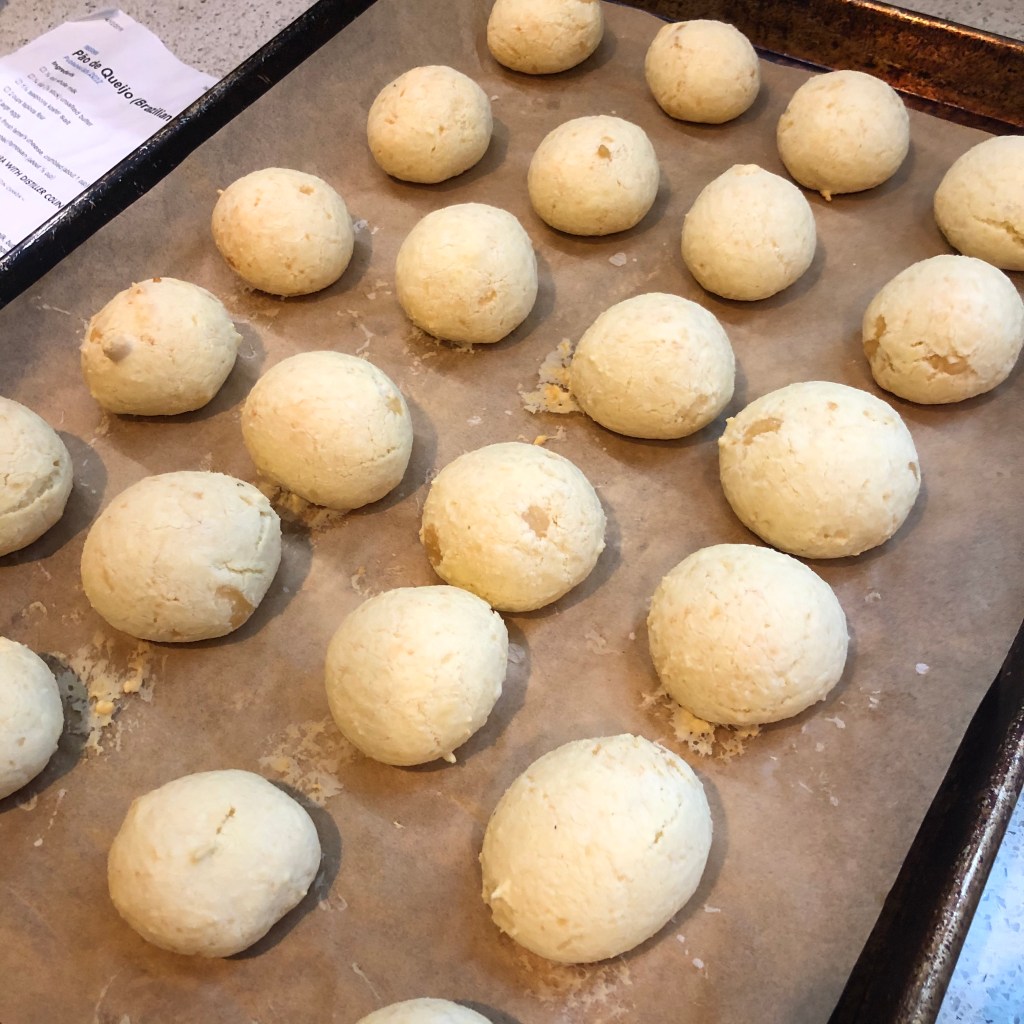
- Minas cheese is fresh cheese so difficult to find, even in specialty cheese stores. I tried many cheese combos suggested by recipes and realized that there was not much variation in texture although there was variation in taste. Over time, I inevitably find bit of different kinds of cheese in small baggies. I started collecting them and when it looks like I can grate about 2 cups, I make pão de queijo. I have even used Bulgarian feta before. The trick is to make sure to have few chunky bits of cheese as possibly for even distribution and rise. The darker bits in the photo below are the cheese chunks.
A friend and I tossed around the idea of starting a pão de queijo shop called “Girls with Balls” one day. Who knows? Could still happen.
 What will Dr. Gwak say?